


Why Baylor is becoming a destination for supply chain expertise
During COVID, we all learned the term “supply chain” as we tried to understand why items like toilet paper and disinfectant wipes were suddenly so hard to find.
Years after the pandemic, most of us again take for granted that the products we want will be available whenever we need them. Behind the scenes, however, intricate supply chains make that convenience possible. Multiple Baylor researchers are making an impact on the field — work that eventually helps all of us.
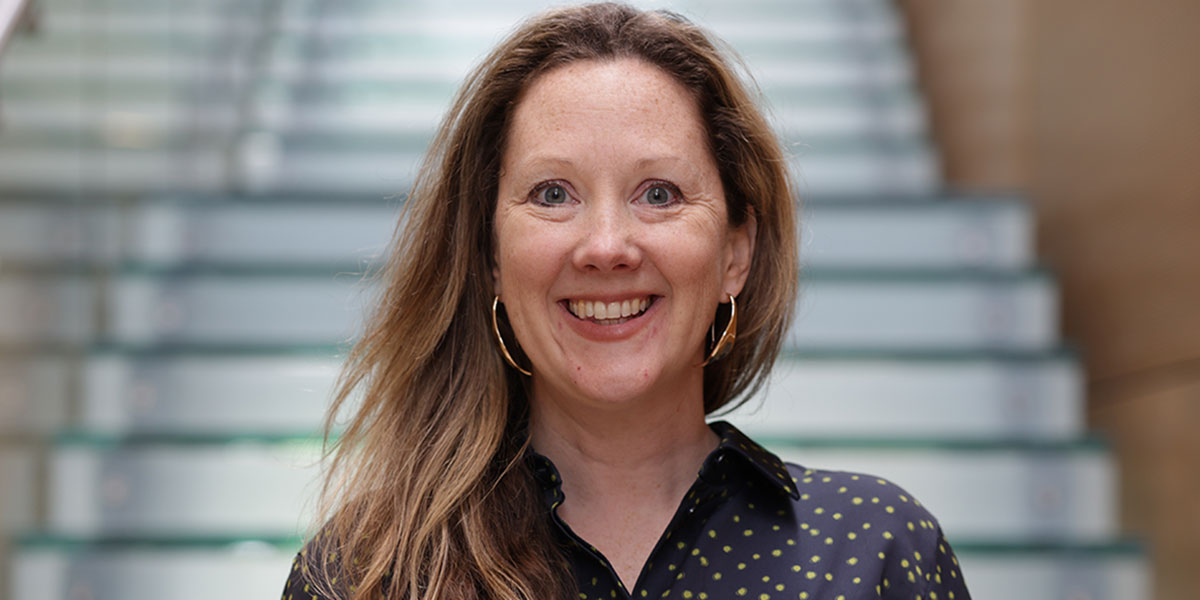
For instance: Dr. Hannah Stolze (pictured above), the William E. Crenshaw Chair of Supply Chain Management, is a leading voice in supply chain research. After developing an interest in the supply chain in the U.S. Army, Stolze came to Baylor in 2023, drawn by BU’s status as a rare Christian R1 institution. She says Baylor brings a perspective to the field that goes beyond efficiency and profitability.
“A lot of universities teach students how to make supply chains faster and more efficient,” Stolze says. “At Baylor, we also ask what those decisions mean for the people involved.”
That distinction reflects a broader Baylor approach to business education. Supply chains are ultimately about people as much as products — connecting workers, companies, communities and consumers across the globe. Baylor researchers are examining how organizations can build systems that are not only effective, but ethical, resilient and sustainable.
Baylor’s growing expertise has also been strengthened by faculty such as Dr. Ade Oyedijo, assistant professor of management. His research focuses on how businesses can build supply chains that are more sustainable, responsible and beneficial to the communities they touch. But for Oyedijo, traditional research publications are only the beginning.
As a contributor to World Economic Forum initiatives focused on supply chain issues, he’s passionate about ensuring that research informs real-world decisions. Whether engaging business leaders, policymakers, or global organizations, Oyedijo works to move ideas from academic journals into places where decisions are made.
While Baylor’s supply chain expertise continues to grow, this isn’t a new area for the university. For years, Dr. Pedro Reyes, associate professor of operations and supply chain management, has been recognized internationally for research that helps organizations navigate increasingly complex supply chains.
Reyes came to Baylor in 2003, and has been in the industry through disruptive events like 9/11 and the COVID-19 pandemic. He’s been honored in the field through roles like his co-editor-in-chief position with Decision Sciences Journal of Innovative Education and awards like Baylor’s 2020 Elizabeth Vardaman Award for Excellence in Mentoring Undergraduates.
Together, these scholars represent a growing concentration of expertise within Baylor’s Hankamer School of Business, one that spans industries, disciplines and continents.
“Businesses don’t operate in a vacuum,” Stolze says. “Every supply chain decision affects people somewhere. Our students want to know not only how to be successful in business, but how to lead well. That’s something Baylor does exceptionally well.”
Sic ’em, Baylor supply chain researchers!