


Baylor Esports claims conference title in first varsity season
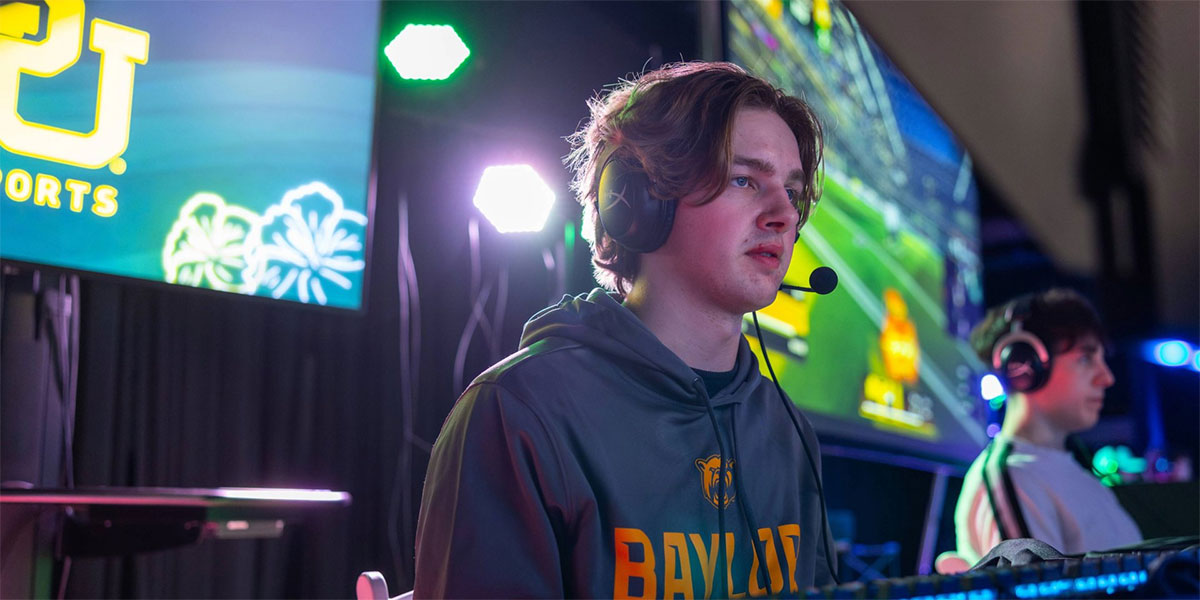
Last fall, Baylor launched its first varsity esports team, led by Baylor alum Adam Stanley (MDiv ’12). Just a few months later, the Bears have their first conference championship — and with eyes on even bigger prizes as they head to nationals.
Your first reaction might be, “Esports? Really? That’s a thing?” And the answer to that is — very much, yes.
“Hundreds of thousands of people watch esports matches, and research shows us that 88% of students are gaming on some level,” says Stanley. “We also see this as a connection to engineering and computer science. The data tells us that about 38% of students interested in esports have an interest in engineering and computer science — tremendous programs on our campus that we want to bolster.”
Baylor Esports competes in the Power Esports Conference (PEC), alongside colleges such as Kansas, Michigan State, Ohio State, Syracuse and Utah. Like any other sport, Baylor Esports ran a regular schedule against such opponents, with scholarship student competitors battling in games such as Rocket League, Valorant, Super Smash Bros. and Overwatch. (Competitions are live-streamed online for interested viewers.)
Earlier this month, Baylor’s Rocket League team defeated Boise State in the Power Esports Conference Grand Finals — held at the HyperX Esports Arena in the Luxor Pyramid in Las Vegas — to secure the program’s first-ever conference championship. The win capped a perfect 20-0 run for the Rocket League team through PEC competition in Baylor’s inaugural season as a varsity program.
“This championship reflects the vision and support of our administration and institution, and above all, the hard work and commitment of our players who made it possible,” says Stanley. “We couldn’t ask for a better result from our collective efforts as a program in our Year Zero.”
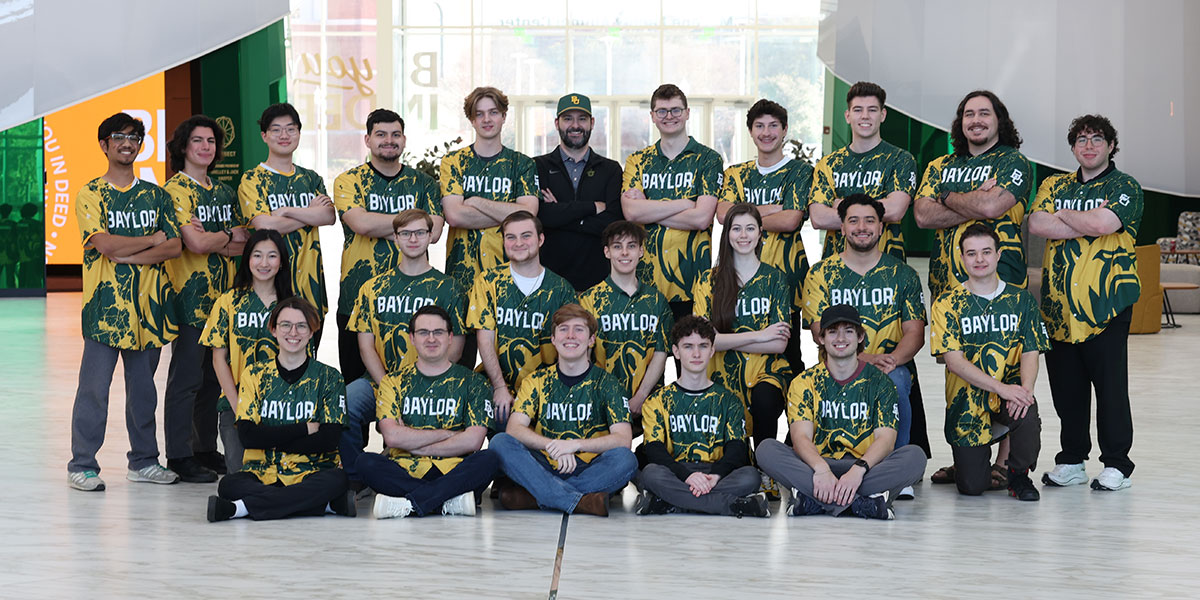
For this first year, Baylor’s roster is a mix of recruited, scholarship student-athletes and varsity walk-ons drawn from the student body. The goal is to build to four scholarship programs next year, and perhaps more in future years.
“The really cool thing about sports is that it has a community impact,” Stanley says. “There’s community in these games; students organize, plan, get together to play, even have watch parties for professional events. We want to cultivate that, drawing students out of their rooms into common spaces to play.”
While the varsity squad is the most visible aspect of Baylor’s esports program, it’s actually only one part of the university’s overall approach. In addition to the four varsity teams (about 25 competitors), Baylor also supports what’s called Academy level (think junior varsity) — another 50 competitors who also represent BU. And then there’s the Oso Esports club team, which includes still more students at a more casual (yet still competitive) level.
“Gaming can be very lonely,” says Stanley, a longtime gamer himself (even while earning his seminary degree at Truett). “It’s easy to put on your headset and turn off the lights and play your game in isolation. It can also have a toxicity to it. But we believe that gaming, like so many other things, can be redeemed. For us, it’s about drawing students out of their rooms and into a common space. Baylor students who love gaming are finding friendships, connecting around shared interests. It’s pretty amazing.
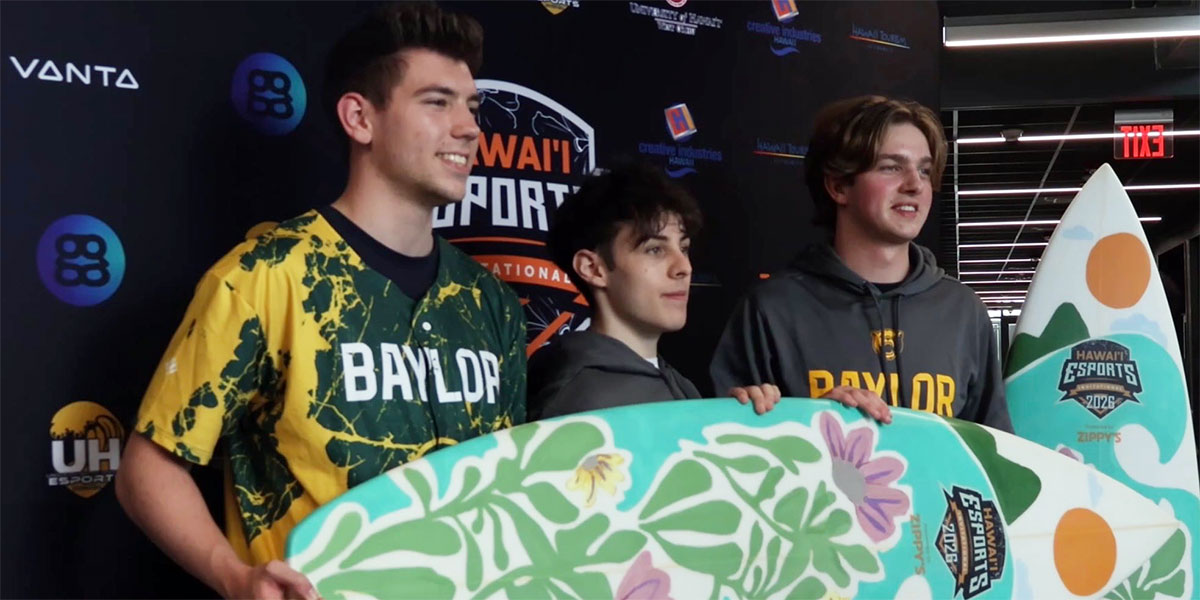
“Aristotle made the claim that the gymnasium itself is a critical part of the educational process,” Stanley continues, “because there you are able to practice perseverance, fortitude, communication, leadership, etc. It doesn’t take a lot of imagination to see this happening in sports like basketball and volleyball, but we see it in esports, too. In a way, Baylor and all of us in esports are building a new gymnasium so that these students can practice these things and become better people through them. That’s why this matters to me.”
As April turns to May, Waco will become the “Esports Capital of Texas,” as it hosts both the Texas Scholastic Esports Federation State Championships (at Baylor’s Hurd Welcome Center, April 30-May 2) and the Collegiate Esports Commissioners Cup (Waco Convention Center, May 1-3). The first event is the Texas high school state championship; the second will mark Baylor’s second opportunity to win a collegiate esports national championship, following the National Association of College Esports Grand Finals (April 23-26).
You can learn more about Baylor Esports at baylor.edu/esports, and get updates by following @BaylorEsports on Facebook and X. Interesting in helping support the program? You can do that here.
Sic ’em, Baylor esports!