


Baylor’s place in the Texas Triangle, the nation’s fastest growing megaregion
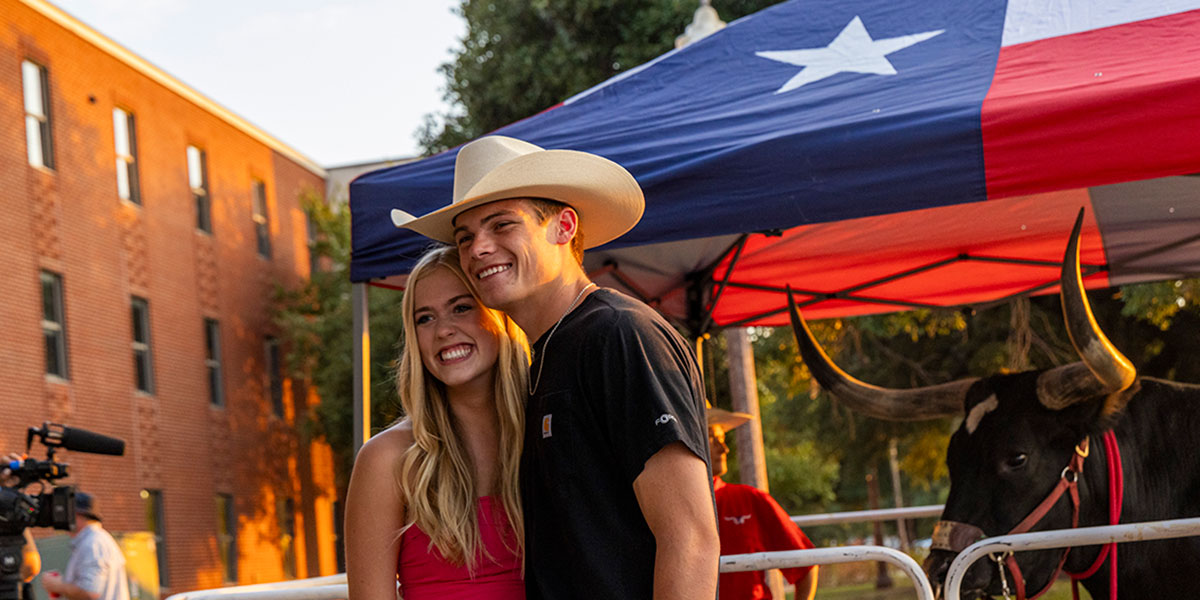
There’s a lot to like about Baylor’s home here in Waco, the heart of Central Texas. A city recently recognized by Southern Living as undergoing a “creative renaissance,” Waco anchors a growing metro with over 300,000 people who enjoy the area’s outdoor activities, history and culture, job market and more.
While such factors alone have long drawn people to the area, there’s a growing focus on the burgeoning megaregion Waco calls home: the Texas Triangle.
Draw lines connecting Dallas-Fort Worth, Houston, and San Antonio, and you get the Texas Triangle — an area bigger than the entire state of Georgia, with almost as many residents as Florida, that’s recognized as America’s fastest growing megaregion. I-35 is essentially the left side of the triangle, running from DFW through Waco and Austin on its way south to San Antonio.
Baylor is well aware of the region’s importance and impact. In Baylor in Deeds, the University’s strategic plan, Baylor committed to ‘take full advantage of Baylor’s location in the center of the ‘Texas Triangle'” in broadening its research impact. For future students, alumni, faculty and staff, that means expanding opportunities to study, live and work in a rapidly growing area — the economic hub of America’s fastest growing state for new jobs. The Triangle includes 50+ Fortune 500 companies, and is comprised of a young, diverse and growing set of metro areas that provide all of the challenges and opportunities that beckon a Christian research university to study and serve.
For example: On the research side, Baylor’s location within the Texas Triangle provides a meaningful laboratory in which to conduct water quality research — a mix of urban and rural areas experiencing increased demands on water, mirroring conversations taking place around the world in clean water supply.
“This is such an important geographical location to be in,” says Dr. Thad Scott (PhD ’06), professor of biology and director of Baylor’s Center for Reservoir and Aquatic Systems Research. “Central Texas is at a climatic gradient between east and west. We’re right in the middle of a skyrocketing population corridor along I-35. This provides us and our students so much to study, because what’s happening right here matters.”
In an area expected to grow to a population of 47 million in the next 25 years, Baylor is set to address the needs of this unparalleled region, supply future leaders, and provide innovative new ways for students to plug into the needs and opportunities around them — with a commitment to do so in ways that benefit our neighbors, students and communities.
Sic ’em, Texas Triangle!