


Baylor among U.S. News’ top 10 for best ‘learning communities’ for a third straight year
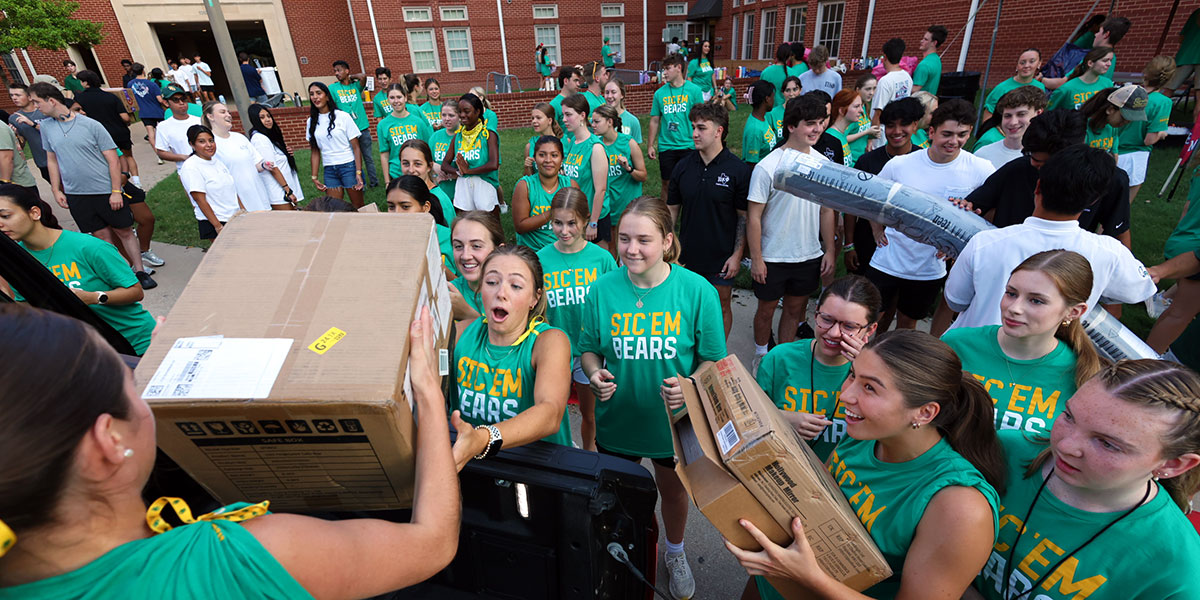
Baylor students living on campus have a wide variety of options. Some choose to live with other students their age; others, with students who have similar academic or extracurricular interests; still others, in faculty-led residential colleges.
Baylor takes these opportunities seriously, and it shows. For the third straight year, Baylor’s learning communities once again rank among U.S. News‘ top 10 nationally — just behind schools like Vanderbilt and Yale, and ahead of, well, just about everyone else. (The honor ranked Baylor No. 1 in the Big 12, No. 1 in Texas, and No. 1 among large private universities.)
Roughly one-third of Baylor undergraduate students live on campus, in one of three types of communities:
First-Year Communities are your traditional freshman residence halls (such as Collins and Penland), allowing new students the opportunity to live with other first-year students who have different interests and majors. Upper-Division Communities (at University Parks and in North Village) offer something similar, but for upperclassmen, and with the amenities of apartment living.
Living-Learning Communities (LLCs) are organized around specific academic programs or extracurricular interests, such as the Science & Health LLC in Earle Hall or the Business & Innovation LLC in Brooks Flats. Students of all classifications live among other students with similar interests or degree plans, sharing special programs and classes together.
Residential Colleges are faculty-led communities that foster academic excellence through intensive faculty-student interaction, such as the Honors Residential College in Alexander and Memorial. Students of all classifications enjoy a special sense of community through events and activities that help connect them with each other and with faculty/staff.
In addition to the hall director and community leaders, every Baylor residence hall has its own faculty-in-residence (a professor who lives in the hall right alongside the students) and resident chaplain (a Truett Seminary student who lives on-site to provide spiritual care) to help guide and serve the students who live there.
It’s rare to find such community in a school Baylor’s size. Most of the other schools in U.S. News‘ top 25 are either much larger (such as flagship state schools, with massive resources to support such programs) or much smaller (which naturally lends itself to a tighter community). Only two other schools of Baylor’s size (between 10,000-20,000 undergraduates) made the top 25 for best learning communities — speaking again to Baylor’s distinct place in the world of higher ed.
Combine that with Baylor’s Christian commitment, beautiful campus, top-5 recognition for “first-year experience,” rare top-40 ranking for both undergraduate teaching and research, and other recent honors, and you can see why so many find BU to be such a special place.
Sic ’em, Bears!